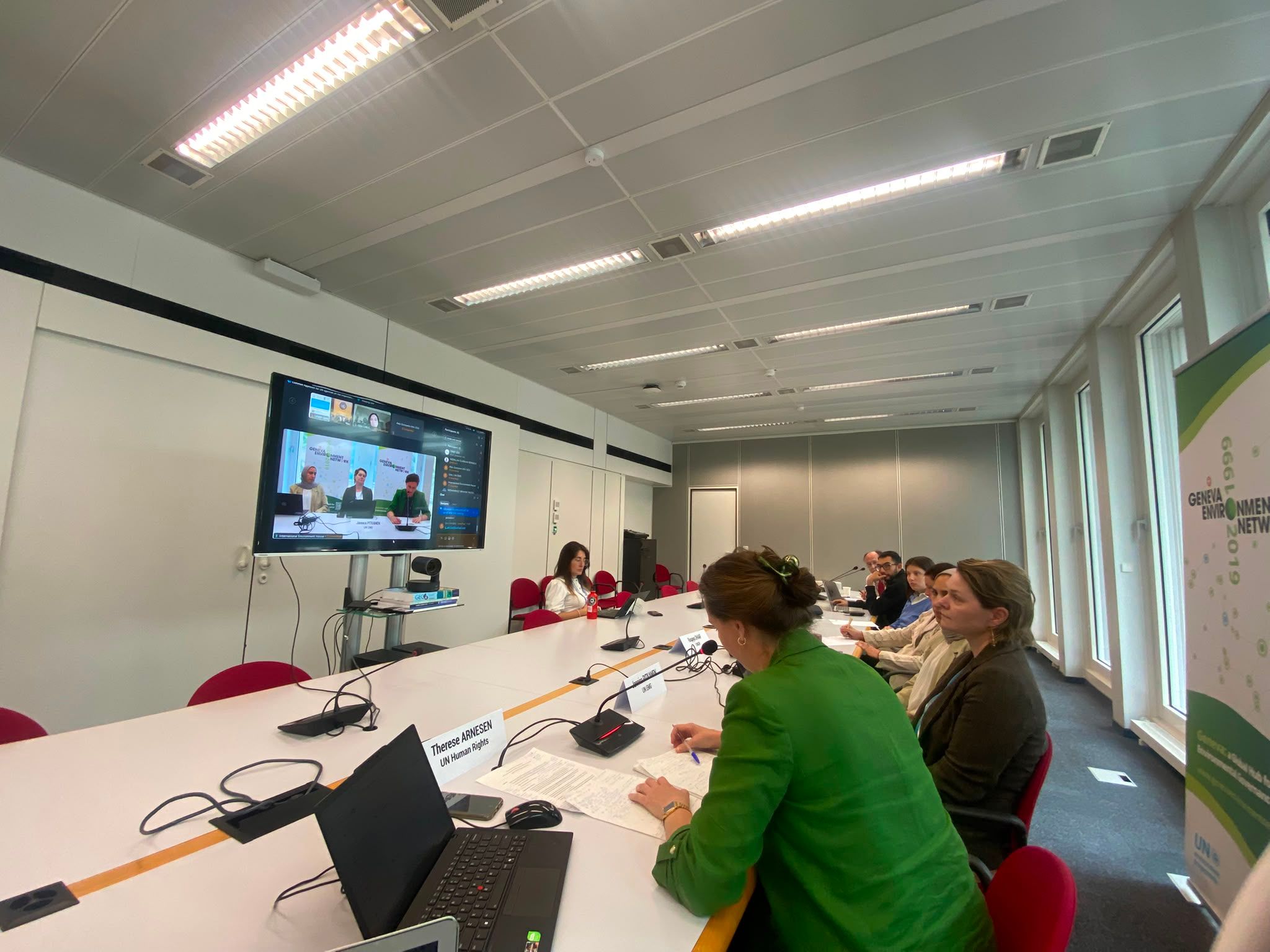
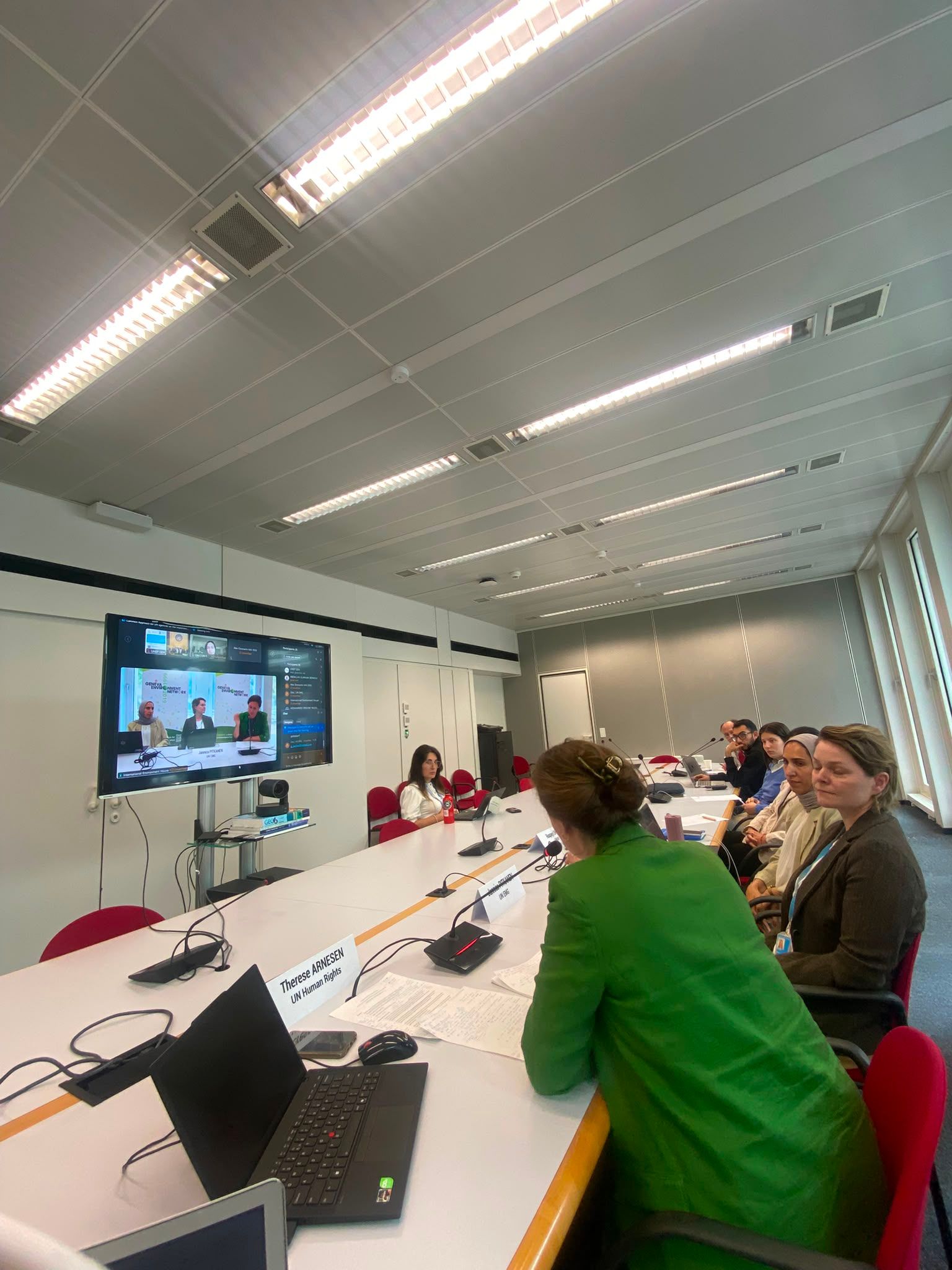
On 10 June 2026, during the CSOs Consultation held in Geneva on the development of a Common Approach for UN agencies on the implementation of the right to a clean, healthy and sustainable environment — organised by the United Nations Environment Management Group (UNEMG) — CYMG contributed a consolidated youth input developed collaboratively across the network.
From the perspective of the Children and Youth Major Group, further integrating the human right to a clean, healthy and sustainable environment across the UN system is essential because environmental degradation is no longer a standalone issue: it directly affects health, food systems, education, migration, peacebuilding, housing, livelihoods, and intergenerational justice.
Young people around the world are already experiencing the consequences of climate change, pollution, biodiversity loss, and environmental injustice in their daily lives. Yet the current framework remains fragmented, unevenly implemented, and often disconnected from the realities of affected communities. CYMG strongly welcomes the development of a Common Approach across UN agencies and sees this process as an opportunity to move from recognition of the right toward meaningful operationalization.
The Right to a Healthy Environment must be mainstreamed across the entire UN System
The right to a clean, healthy and sustainable environment cannot remain siloed within environmental discussions alone. Environmental conditions shape the enjoyment of all human rights and influence nearly every area of UN work — including health, food security, biodiversity, education, migration, development, gender equality, ocean governance, Indigenous Peoples' rights, and peace and security.
A common UN approach is necessary to ensure coherence across agencies, avoid fragmented implementation, strengthen accountability, and translate commitments into practical action at country level.
CYMG also stresses that current frameworks still suffer from major implementation and enforcement gaps. While important normative progress has been made, many communities still lack access to justice, environmental protections, multi-hazard early warning systems, meaningful participation mechanisms, and access to understandable environmental information. For many young people and marginalized communities, environmental rights remain abstract legal concepts rather than lived realities.
The Common Approach must move from principles to action
CYMG encourages UN agencies to focus on operationalizing the right through concrete institutional mechanisms and programming tools:
Integrate across UN programming
Jointly develop practical guidance translating the right into sector-specific action in health, infrastructure, food systems, water, spatial planning, and disaster resilience.
Strengthen accountability
Environmental human rights focal points, stronger monitoring, and mandatory environmental rights screening for UN-supported projects before approval.
Data, technology & accessibility
Invest in accessible environmental information tools, open digital public goods, and approaches that translate data into locally understandable formats.
The Common Approach should also encourage the recognition and integration of community-generated environmental data within official assessments and decision-making processes, alongside scientific evidence and Indigenous knowledge systems. Technology should complement — not replace — community knowledge.
Young people must not only be viewed as beneficiaries of environmental action, but as equal partners in shaping and implementing solutions.
Youth and Civil Society must be treated as partners, not observers
A central message from CYMG is that youth participation must move beyond symbolic consultation. Young people and civil society should be recognized as co-creators, innovators, implementation and accountability partners. The Common Approach should institutionalize meaningful and continuous engagement throughout policy design, implementation, monitoring, and evaluation.
Permanent participation mechanisms
Accessible language, reduced administrative barriers, multilingual engagement, and continuous partnerships rather than one-off consultations.
Environmental rights literacy
Human rights literacy programmes, UN Youth envoys on environmental rights, advocacy training, mentorship, and pathways for direct engagement.
Youth-led innovation & financing
Simplified small-grant mechanisms, seed funding, innovation funds, and dedicated percentages of core project budgets for local youth-led initiatives.
Investing in youth-led solutions is not only an investment in environmental protection, but also in long-term resilience, social stability, and sustainable development.
CYMG believes the Common Approach represents an important opportunity to transform the recognition of the right to a clean, healthy and sustainable environment into a practical reality for communities worldwide.
To succeed, the approach must be rights-based, operational, youth-inclusive, locally grounded, and supported by meaningful accountability mechanisms. CYMG expects the Common Approach to be accompanied by adequate institutional resourcing, not just policy commitment.
The success of this Common Approach will ultimately depend on whether it creates tangible improvements in the lives of people and communities most affected by environmental degradation — especially future generations. CYMG stands ready to continue contributing constructively to this process.